

Exhibition
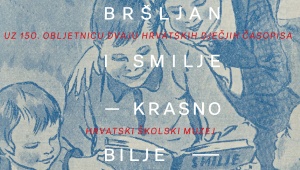
IVY AND IMMORTELLE – LOVELY PLANTS
For the 150th anniversary of two Croatian children’s magazines
Organizer
Croatian School Museum, Trg Republike Hrvatske 4, 10000 Zagreb www.hsmuzej.hr
On the Behalf of the Organizer
Anita Zlomislić
Author of the Exhibition
Štefka Batinić
Professional associate of the exhibition
Frano Dulibić
Visual Design of the Exhibition
Damir Gamulin
Antun Sevšek
Organizirano oblikovanje
Marketing
Marijana Bračić
Educational Programme
Ivana Dumbović Žužić
Technical associate
Nikica Renić
Ars Kopija, October 2023
From October 24 to December 9, 2023
The exhibition and catalogue were financed by the City Office for Culture and Civil Society and the Ministry of Culture and Media of the Republic of Croatia.
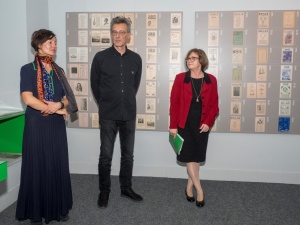
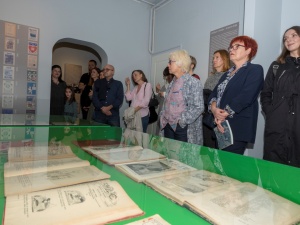
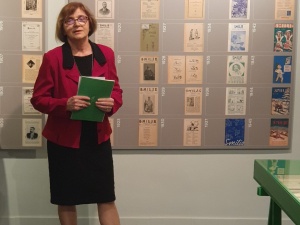
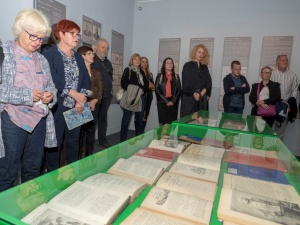
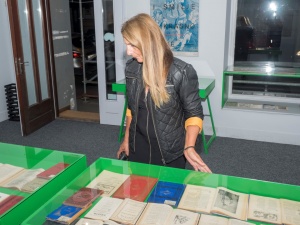
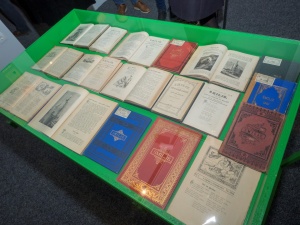
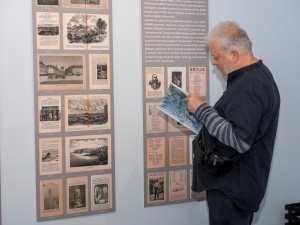
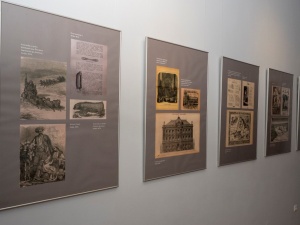
The exhibition and catalog titled Ivy and Immortelle – Lovely Plants (Bršljan i Smilje – krasno bilje) presented two children’s magazines launched in 1873. Both are a product of teachers’ activities in the second half of the 19th century, which implied efforts to create literature more appropriate for children. No other children’s magazine was published in Croatia at the time Bršljan and Smilje were launched. Two earlier attempts were a precious experience but also a warning that it would not be easy to acquire a sufficient number of subscribers and maintain the magazines for an extended period of time. Ivan Filipović launched the first Croatian children’s magazine titled Bosiljak (Basil), which was published from 1864 to 1868, whereas Ljudevit Tomšić managed to publish only six editions of his magazine titled Zlatni orasi (Golden Walnuts) (1870).
In the 1870s, the teaching profession in Croatia was organized to pursue solidary and charitable purposes but also for the purpose of providing professional training and education and undertaking organized educational and cultural activities. This resulted in two distinct groups within the teacher community, which held different views regarding further development of education and teachers’ position within the schooling system. Led by Ivan Filipović, the Croatian Pedagogical & Literary Union represented more liberal views in terms of secularization of the school system and teacher autonomy, whereas the National School Society led by Franjo Klaić was more reserved vis-à-vis such processes. By the end of the 19th century, the Union had become a leading professional association of Croatian teachers which would, among other things, play an important role in the publication and development of educational literature and children’s books.
The first edition of Smilje was published on 1 May 1873 by the Croatian Pedagogical & Literary Union. After failing to reach an agreement with the publishers of Smilje, Ljudevit Tomšić proceeded to publish the first edition of the Bršljan magazine. Both these magazines were intended for lower-grade primary school students. Smilje was published without interruption until 1945 and continues to be the longest running Croatian children’s magazine. Bršljan was discontinued after its third year, only to be relaunched in 1889 and published until 1903. It is interesting to look at their pedagogical function and their contribution to Croatian children’s literature through the prism of editorial concepts and the contents they published.
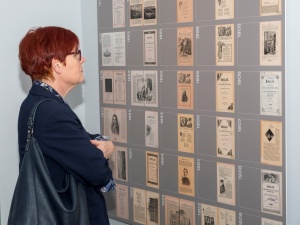
What is common to both magazines when it comes to artwork and graphics are exported illustrations, which dominated in the 19th century and were also commonly used later, as well as a focus on headers and their eventual modernization. Both magazines aimed to enrich their sections by using as many illustrations as possible, however, funding for this segment to allow hiring Croatian illustrators was almost inevitably difficult to obtain. Even between the two wars, at a time of a great boom in illustrated books and magazines published in Croatia, only Smilje managed to achieve appropriate harmony between text and image and a modern appeal appropriate for school children at the time by hiring Andrija Maurović.
Bršljan was and is still considered the best magazine of the 19th century. Smilje lived its long 19th century until the death of its long-time editor Tomislav Ivkanec in 1912. New editors were more open to new trends in children’s literature, which also corresponded to new reformist pedagogical shifts. However, this announced a new reality, which would fundamentally change life. Smilje’s topics included the Big War. The period of stability and long-lasting shielded childhood has gone forever, and so has the period of unquestionable continuity and dominant position of Smilje as the most widely read children’s magazine. In the 1920s, the magazine reduced its circulation and in the early 1930s merged with Špoljar’s Vrelo (Well) which was published as Smilje-Vrelo for a while.
In the 1930s, teachers were no longer the chief “producers” of entertainment for children as there was increasing interest in contents targeting child audiences. Smilje was transformed into a modern children’s magazine, with more interesting contents and greater visual appeal, but it continued to struggle in competing with children’s sections of daily papers, as well as increasingly popular new media such as films and comic books.
Throughout its history spanning more than seven decades, Smilje was primarily a magazine intended for lower-grade primary school students, featuring pop science contents corresponding to the prevailing trends at the time. Various tendencies were also reflected over time in the form of ideological and political influence, particularly during the Kingdom of Serbs, Croats and Slovenes, the Kingdom of Yugoslavia and the Independent State of Croatia. Such reflections of times were among the causes of Smilje’s dissolution. Survival in three states and enviable continuity were too heavy a burden for a magazine intended to raise children of a new socialist Yugoslavia. This role was assumed by the Pionir magazine in the initial years following World War 2, which was in 1951 replaced by Radost that continued to be published without interruption until 2022.
Today, only two magazines have managed to withstand the test of time - Smib for lower-grade primary school students and Modra lasta (Blue Swallow) for higher-grade primary school students. The former was launched in 1970 and its name derived from Smilje and Bosiljak, whereas the latter, launched in 1954, marked the teenage years of many generations. It seems important to maintain them for as long as possible and avoid depriving future generations of the smell of a freshly printed magazine on a student desk.
Launched 150 years ago through noble intentions of Croatian teachers, these two magazines, Bršljan and Smilje, are merely small seedlings in a long line of educational and literary ventures undertaken by these generations of true enthusiasts. We should therefore remind people of them and the roles they once played, as well as the heritage they now represent.
ACTUAL
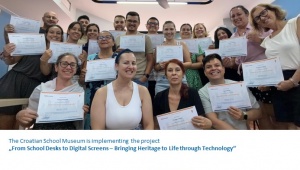
Professional Development for Croatian School Museum Representatives Completed in Athens

Free admission to museums and libraries, and to swimming pools
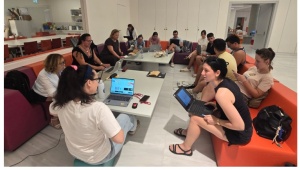
Professional development for representatives of the School Museum is currently underway in Athens
The Croatian School Museum is participating in an Erasmus+ mobility project
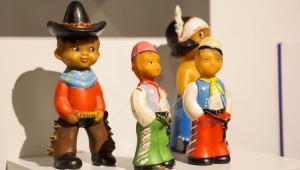
“Once Upon a Time… Croatian Toy Factories in the 20th Century”
Moslavina Museum Kutina
Zagreb City Museums Free Throughout March
Free Art Workshops!
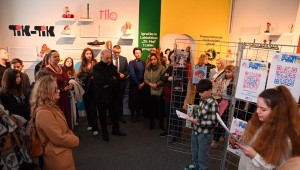
School Newspaper Exhibition
NIGHT OF MUSEUMS 2026
Zagreb Museum Weekend 4–7/9/2025

LESSONS FROM THE PAST

THE TEXTBOOK – For Those Who Want to Know More

Oh You Little Pioneers
IVY AND IMMORTELLE – LOVELY PLANTS

CROATIAN TEACHERS’ HOME

GAMES AND FUN FOR THE LITTLE ONE

THE CENTURY OF THE CHILD IN CROATIA

Legacy of Mato Lovrak at the Croatian School Museum
Calligraphy - penmanship

Bilderbuch für Kinder – Picture Book for Children

TEACHERS IN CROATIA 1849–2009
